

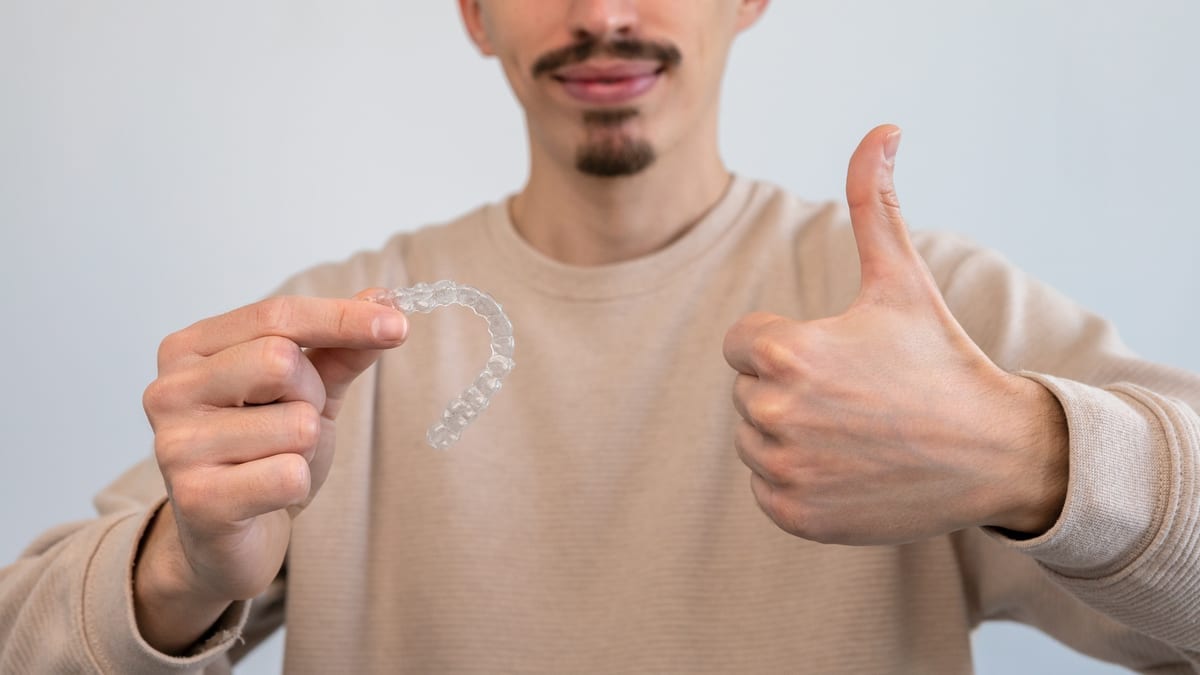
Finishing your last Invisalign tray feels like a major milestone. Your teeth look straighter, your smile feels new, and you're ready to move on. But your Invisalign journey isn't over when treatment ends in Oklahoma City — not by a long shot. The retention phase is just as important as the alignment phase, and skipping it can undo months of progress.
Teeth are anchored in bone and soft tissue. Even after Invisalign repositions them, the surrounding structures haven't fully stabilized. Your teeth naturally want to drift back toward their original positions. This process is called relapse, and it's more common than most patients expect.
Retention is the phase that prevents relapse. It begins immediately after your final aligner. Without a plan in place, even small amounts of drift can affect your bite, your appearance, and your overall oral health.
At Royal Oak Family Dental of Oklahoma City, Dr. Kandar helps every Invisalign patient transition smoothly into retention. The goal is to protect the smile you worked so hard to achieve. Retention isn't optional — it's the final step in your orthodontic treatment.
Not all retainers are the same. Dr. Kandar will recommend a retainer type based on your specific case and your lifestyle. Understanding your options helps you make an informed decision.
Each option has real advantages. Some patients prefer the convenience of a fixed retainer. Others prefer the flexibility of a removable one. Dr. Kandar will walk you through the pros and cons of each during your retention consultation.
Many patients choose a combination approach. A fixed retainer on the lower teeth pairs well with a clear removable retainer for the upper arch. This strategy gives you maximum protection without maximum inconvenience.
This is one of the most common questions Dr. Kandar hears after treatment ends. The short answer is: your teeth will move. The longer answer involves timing, biology, and consequences that take time to reverse.
In the first few weeks after Invisalign, your teeth are especially vulnerable. The bone around each tooth is still adapting to its new position. This is when movement happens fastest if nothing holds the teeth in place.
Here's what patients often experience without consistent retainer use:
Relapse doesn't always happen overnight. But gradual drift adds up. Many patients don't notice the shift until it's already significant. By then, corrective treatment requires more time and expense than simply wearing a retainer would have.
Most patients hear the honest answer and feel surprised. Retainers aren't a short-term commitment — they're a long-term habit. Dr. Kandar recommends wearing a retainer for life if you want to protect your results permanently.
That said, the schedule changes over time. The first phase is the most intensive. Here's what a typical retention timeline looks like:
Compliance is the biggest factor in retention success. Patients who wear their retainers consistently keep their results. Those who stop early — even after six months — often experience noticeable drift within a year.
Retainer wear also becomes easier over time. Most patients settle into a nightly routine without much thought. It becomes as automatic as brushing your teeth before bed.
Retention is also a great time to build strong dental habits. Your teeth are in their best position, and this is the ideal moment to invest in your overall oral health. Regular cleanings and checkups help you maintain both alignment and gum health.
If you're interested in brightening your newly straightened smile, this is also the right time to explore Teeth Whitening Oklahoma City options. Whitening works best on clean, properly aligned teeth. Many patients choose to whiten after finishing Invisalign for exactly this reason.
For patients who feel anxious about dental visits, our team also offers Laughing Gas Oklahoma City to help you stay comfortable. Whether you're coming in for a retainer check or a routine cleaning, we want every visit to feel manageable and stress-free.
Dr. Kandar and the team at Royal Oak Family Dental of Oklahoma City are here to support you through every phase of your smile journey. That includes retention, monitoring, and any follow-up care you need along the way.
Completing your Invisalign aligners is a reason to celebrate. But your Invisalign journey isn't over when treatment ends in Oklahoma City — your retainer keeps that progress intact. Skipping retention means risking the results you spent months achieving. Wearing your retainer consistently is the simplest way to protect your investment and your smile for years to come. Ready to take the next step in your smile journey? Book Now to schedule your appointment with our team.
You should begin wearing your retainer immediately after your last aligner. Even waiting a few days can allow your teeth to begin shifting. Dr. Kandar will have your retainer ready at or shortly after your final Invisalign appointment so there's no gap in protection.
Feeling stable doesn't mean your teeth are permanently fixed in place. Teeth continue to shift subtly throughout your life due to aging, jaw changes, and natural pressure from chewing. Most dental professionals, including Dr. Kandar, recommend nightly retainer wear indefinitely to prevent long-term relapse.
Contact Royal Oak Family Dental of Oklahoma City as soon as possible. Even a few days without a retainer — especially in the early months — can allow noticeable movement. Do not wait until your next scheduled appointment. A replacement retainer can typically be made quickly to minimize any shifting.
Retainer inclusion varies depending on your specific treatment agreement. During your consultation at Royal Oak Family Dental of Oklahoma City, Dr. Kandar will explain exactly what is included in your plan and what any follow-up retainers may involve financially.
Yes. Removable retainers should be rinsed with water after removal and cleaned daily with a soft toothbrush. Avoid using hot water, which can warp the material. Fixed retainers require careful flossing around the bonded wire. Dr. Kandar's team will show you exactly how to care for whichever retainer type you receive.